



Baufest is a software consultancy. I worked as UI Designer on two major banking platform projects, owning the design system that connected design and development across both.
Design System
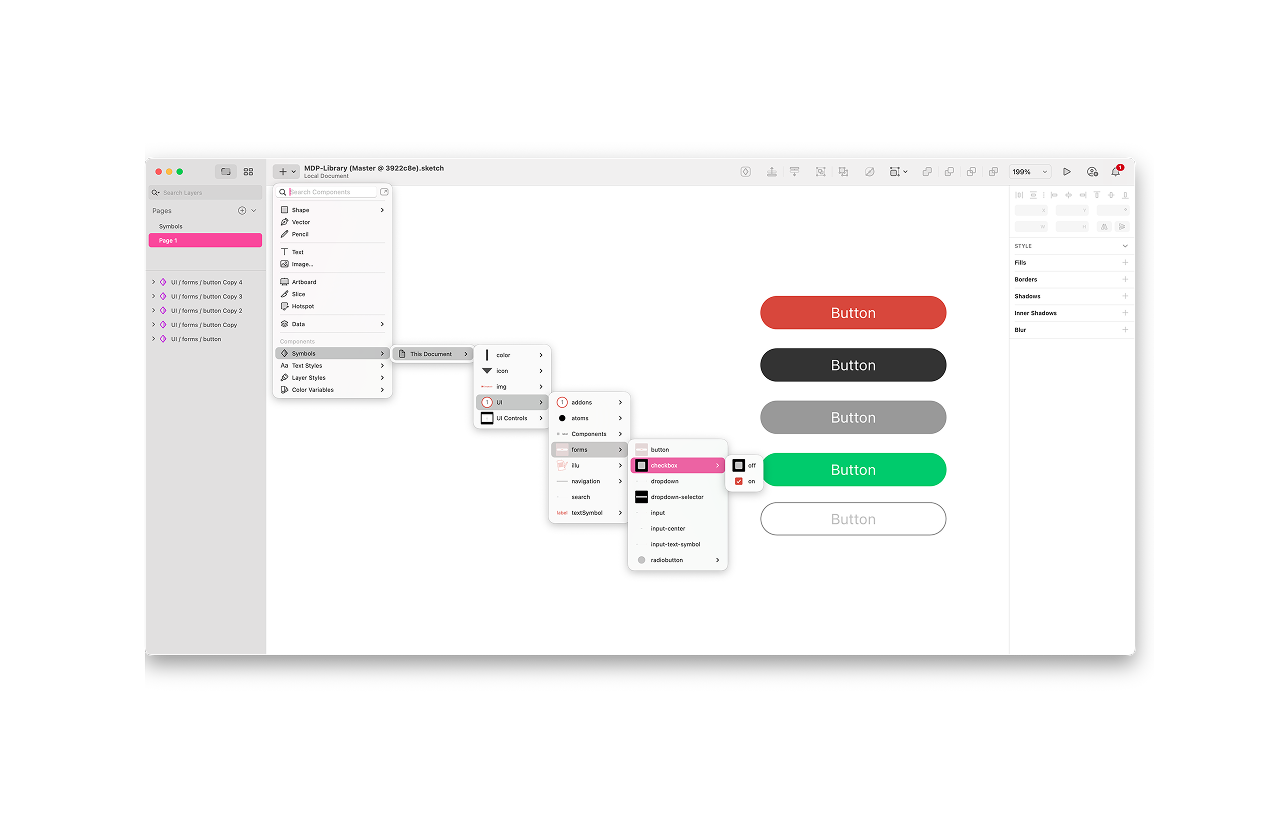
The core challenge wasn’t designing components, it was making them modular enough to work across two distinct banking products without diverging into two separate systems. I managed and promoted the component library, ensuring consistency in patterns, states, and spacing across projects. Handoff issues between design and development dropped, and UI consistency across both products got noticeably better.
Asset Versioning
Before this, there was no versioning. Files moved by email or sat in a shared Drive folder with no real structure. For a regular project that’s manageable, but for a design system it’s a real problem: two people updating the same component in parallel, no way to know which file is current, no single source of truth for the atoms and base components shared across both products.
I proposed using Abstract and put together a presentation showing the team why version control for design files made sense, the same arguments you’d make for code. No resistance, they got it. From there I set up the branching structure, defined the naming conventions, and established weekly sessions for creating and maintaining the system, reviewing new elements before they went into the base and making sure nothing drifted between the two projects.
It wasn’t glamorous work. But having a proper workflow meant the component library could actually be maintained, not just built once and left to decay.
Learnings
Some contexts don’t call for creativity, and that’s fine. Banking is too normalized and structured for design innovation. The value was in making the system more robust and consistent, not in pushing it somewhere new. Knowing when to just do the disciplined work, without looking for a creative angle, is actually useful.